Bike Insurance A Complete Guide to Coverage, Benefits, Types, and How to Choose the Best Policy in India
Buying a bike is exciting. Whether you use it for daily commuting, travelling with friends, or enjoying long rides, your motorcycle makes life easier. But have you ever thought about what would happen if your bike were stolen, damaged in an accident, or involved in a collision with another vehicle?
This is where bike insurance becomes important. It provides financial protection against unexpected expenses and helps you meet legal requirements while riding on Indian roads.
Choosing the right insurance policy does not have to be complicated. In this guide, we will explain everything you need to know about bike insurance, including its types, benefits, coverage, costs, and the process of buying a suitable policy.
1. What Is Bike Insurance?
Bike insurance is a financial agreement between a bike owner and an insurance company. Under this agreement, the insurance provider offers financial protection against specific risks involving your two-wheeler in exchange for a premium.
Depending on the policy you purchase, insurance may cover accidental damage, theft, fire, natural disasters, and third-party liabilities.
For example, imagine that your motorcycle gets damaged in an accident. Without suitable insurance, you may have to pay the entire repair bill yourself. However, if your policy covers that particular incident, the insurance company may pay the eligible expenses according to the policy terms.
In simple words, bike insurance works like a financial safety net that helps protect your vehicle and your savings.
2. Why Is Bike Insurance Important in India?
Bike insurance is important for two main reasons: legal compliance and financial protection.
Under the Motor Vehicles Act, 1988, third-party liability insurance is mandatory for two-wheelers used on public roads in India.
However, legal requirements are only one part of the story. Accidents can happen unexpectedly, even when you follow traffic rules and ride carefully.
Here are some reasons why having proper bike insurance matters:
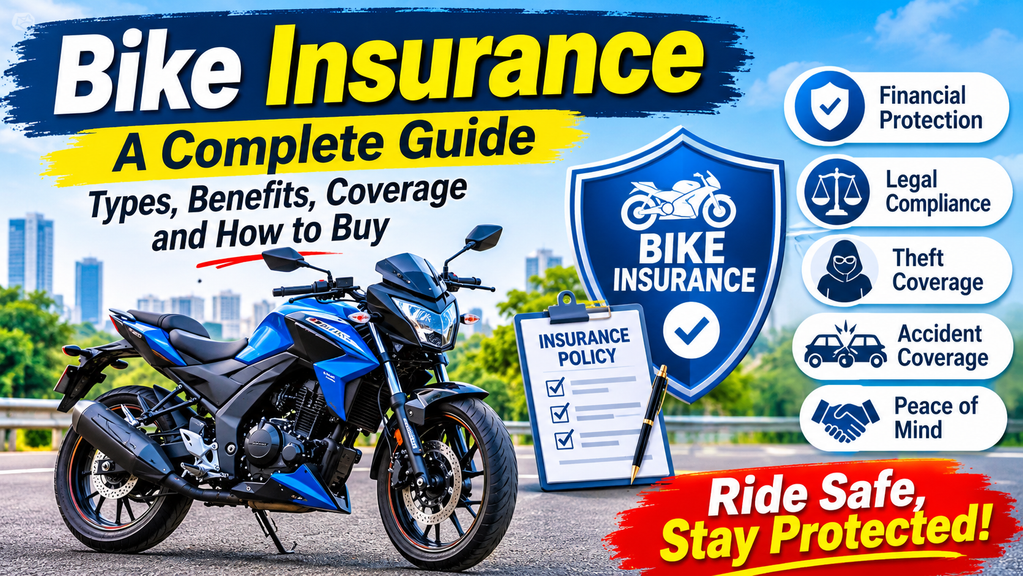
- Financial protection: It can reduce your out-of-pocket expenses after covered accidents.
- Legal compliance: Valid third-party insurance helps you meet Indian motor vehicle requirements.
- Theft protection: Suitable policies can compensate you if your insured motorcycle is stolen.
- Accident coverage: Comprehensive policies can cover eligible repair expenses.
- Peace of mind: You can ride with greater confidence knowing that certain unexpected risks are covered.
Think of insurance as an umbrella. You may not need it every day, but having it can make a difficult situation easier to handle.
3. Different Types of Bike Insurance Policies
Before purchasing a policy, you should understand the main types of bike insurance available in India.
Third-Party Bike Insurance
Third-party insurance is the minimum legally required motor insurance for riding on public roads in India.
It covers your legal liability if your motorcycle causes injury, death, or property damage to another person, subject to applicable policy conditions.
However, it does not cover damage to your own motorcycle.
This option may suit people who want basic legal protection at a relatively lower premium.
Comprehensive Bike Insurance
Comprehensive bike insurance provides broader protection by combining third-party liability coverage with own-damage protection.
Depending on the policy, it can cover:
- Accidental damage to your motorcycle.
- Theft of the insured vehicle.
- Fire-related damage.
- Floods, storms, and other covered natural disasters.
- Certain man-made incidents.
You can also select additional benefits, known as add-ons, by paying an extra premium.
This option is worth considering if you own a new, expensive, or frequently used motorcycle.
Standalone Own-Damage Insurance
Standalone own-damage insurance covers damage to your own motorcycle from insured events.
It can be useful when you already have an active third-party insurance policy but want additional protection for your vehicle.
Remember that standalone own-damage insurance does not replace mandatory third-party coverage.
4. What Does Bike Insurance Cover?
The coverage depends on your selected policy and its terms and conditions.
Generally, a comprehensive bike insurance policy may provide protection against the following situations:
Accidental Damage: Covers eligible repair expenses when your motorcycle is damaged in an accident.
Theft: Provides compensation if your insured bike is stolen and the claim meets the policy requirements.
Fire Damage: Covers eligible losses caused by fire and certain related incidents.
Natural Disasters: Depending on the policy, protection may include floods, earthquakes, storms, and other natural events.
Third-Party Liability: Covers your legal responsibility for injury, death, or property damage caused to another person.
Before buying a policy, always check the coverage details rather than assuming every possible situation is included.
5. What Is Not Covered by Bike Insurance?
Understanding exclusions is just as important as understanding benefits.
Most bike insurance policies contain certain exclusions. These are situations in which the insurance company may reject a claim.
Common exclusions include:
- Normal wear and tear.
- Mechanical or electrical breakdowns not covered by the policy.
- Damage caused while riding without a valid driving licence.
- Accidents involving riding under the influence of alcohol or drugs.
- Damage resulting from illegal activities.
- Losses outside the policy’s geographical coverage.
- Claims arising from excluded or prohibited vehicle use.
Some exclusions may vary between insurers and policy types. Therefore, carefully read the policy document before making a purchase.
6. Factors That Affect Bike Insurance Premiums
Many bike owners wonder why insurance premiums differ between motorcycles. The answer depends on several factors.
Bike Model and Engine Capacity: The motorcycle’s make, model, and engine capacity can influence the premium.
Insured Declared Value (IDV): IDV represents the insured value of your motorcycle for total-loss and theft claims, subject to policy conditions. A higher IDV generally increases the own-damage premium.
Location: Your registration location and associated risk factors may affect insurance pricing.
Policy Type: Comprehensive insurance generally costs more than basic third-party insurance because it offers broader protection.
Add-On Covers: Optional benefits increase the overall premium.
No Claim Bonus: Eligible policyholders can receive discounts on the own-damage portion of their renewal premium for claim-free years.
Understanding these factors can help you compare policies and select suitable coverage without paying for unnecessary extras.
7. How to Buy Bike Insurance Online
Buying bike insurance online is convenient and usually takes only a few steps.
Follow this simple process:
- Visit the official website of your preferred insurance company.
- Enter your motorcycle registration number.
- Provide the requested vehicle details.
- Select the type of insurance policy you need.
- Compare available coverage options and premiums.
- Review optional add-ons and policy exclusions.
- Complete the payment through an available payment method.
- Download your policy document after successful purchase.
Before completing the transaction, verify your vehicle details, registration number, selected coverage, and policy duration.
Buying online also makes it easier to compare multiple insurers without visiting different offices.
8. How to Save Money on Bike Insurance
A good insurance policy does not necessarily have to be expensive. You can use several practical strategies to manage your premium.
- Compare policies: Check coverage and prices from multiple insurance providers.
- Maintain a claim-free record: Eligible policyholders can earn a No Claim Bonus.
- Choose suitable add-ons: Purchase additional coverage based on your actual requirements.
- Renew on time: Avoid unnecessary policy gaps and protect your renewal benefits.
- Select an appropriate IDV: Consider your motorcycle’s reasonable market value.
- Use a recognised repair network: Check whether your insurer offers cashless repairs at suitable network garages.
The goal should not be to find the cheapest policy at any cost. Instead, look for a balance between affordable premiums and useful protection.
9. How to File a Bike Insurance Claim
Filing an insurance claim may seem stressful, especially after an accident. However, following the correct process can make things easier.
Here are the general steps:
Step 1: Inform Your Insurance Company
Contact your insurer as soon as possible after the incident. Provide accurate information about what happened.
Step 2: Register the Claim
Complete the claim registration process through the insurer’s website, mobile application, or customer support.
Step 3: Submit Required Documents
Depending on the claim, you may need your policy document, driving licence, registration certificate, photographs, repair estimates, and other supporting documents.
Step 4: Vehicle Inspection
The insurer may arrange an inspection or survey to assess the damage.
Step 5: Claim Approval and Settlement
After reviewing the documents and policy coverage, the insurer processes the eligible claim according to its terms.
For theft claims, additional documents and a police report or other official records may be required.
Always follow your insurer’s instructions and avoid repairing the vehicle before inspection when the insurer requires prior approval.
10. How to Choose the Best Bike Insurance Policy
Choosing the right policy requires more than comparing premium prices.
Consider these important points before making your decision:
- Check the insurance company’s claim support and service reputation.
- Understand the difference between third-party and comprehensive coverage.
- Compare policy exclusions and deductibles.
- Review the available cashless garage network.
- Check the IDV offered for your motorcycle.
- Understand the terms of optional add-ons.
- Read customer reviews and policy documents carefully.
You should also consider how frequently you use your bike and the cost of repairing or replacing it.
A policy that suits a daily commuter may not necessarily be the best choice for someone who owns an expensive sports motorcycle.
Conclusion
Bike insurance is an essential part of responsible motorcycle ownership in India. It helps protect you against certain financial losses, provides third-party liability coverage, and offers additional protection depending on the policy you choose.
Whether you select third-party insurance, comprehensive coverage, or standalone own-damage insurance, understanding your requirements is the first step towards making a smart decision.
Before purchasing a policy, compare different options, check the coverage details, understand exclusions, and review the premium carefully. Remember, the best bike insurance policy is not always the cheapest one. It is the policy that provides suitable protection, reliable service, and value for your money.
Ride safely, follow traffic rules, and keep your bike insurance active so you can enjoy every journey with greater confidence.